

Custom-molded hearing protection · Made in Mississauga, Canada Q

Molded to you. Filtered for your noise.

A plug that hurts by the third hour, or that comes out so you can hear someone, is not protecting you 11. Qui8 plugs are printed from a 3D scan of your own ears and finished in soft silicone, so they sit where a foam plug never quite does Q. Inside each one is a filter chosen for what you do: a valve that closes on a gunshot, a filter that cuts the shriek of a plant and keeps the voices, or a flat filter that turns a show down without muffling it S1S2S3. Safety orange, so the person next to you can see you are protected Q.

  • Scanned to your ear
  • Soft silicone
  • Safety orange
  • Filter matched to your noise
  • Groups welcome
Man in shooting glasses and a cap aiming a pistol at an outdoor range, an orange custom earplug in his ear
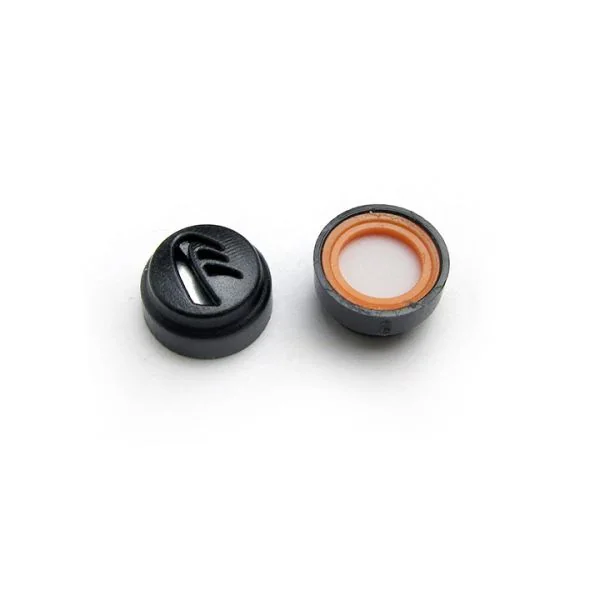
Black acoustic earplug filter shown upright and flipped over; the underside has an orange sealing ring around a white membrane
SPEC Inset: the acoustic filter, front and back. It snaps into the mold S1Q
25 → 11 dB
A 25 dB plug out for five minutes an hour protects like an 11 dB plug 11
Rated best
Custom-moulded plugs were rated most comfortable of nine earplug types in a six-week field survey 13
11.0 M
Canadians aged 19 to 79 have worked in noisy environments 4
1 scan
One mold; change the filter when your noise changes Q

How to read this page. Statements marked Q are Qui8's own product and service statements. S1 to S3 are the filter supplier's specification sheets. Numbered sources are published studies and public guidance; the full list is available on request from the industrial page.

  1. 1

    Scan

    Each ear is captured with a 3D scanner, at our Mississauga location, an approved hearing clinic, or on a group day at your club, range, plant or venue Q. In a clinical comparison people rated scanning more comfortable than a traditional impression and preferred it 22.

  2. 2

    Print

    Your molds are 3D-printed from the scan and finished in soft safety-orange silicone in Mississauga Q.

  3. 3

    Filter

    We fit the filter for your noise: impulse for the range and the field, DI for the plant, DM for the stage, or solid for the loudest rooms S1S2S3Q. Change it later without a new scan Q.

Pick your world

Same mold. A different filter for every kind of loud.

Find yourself below. Each card says which filter we would fit and why. If you work in more than one of these, you need one scan and two filters, not two pairs Q.

Man in shooting glasses and a cap aiming a pistol at an outdoor range, an orange custom earplug in his ear

At the range

Closes on the shot. Opens between them.

Foam blocks everything, so you pull one out to hear the range officer. Muffs fight your cheek weld. The DI Impulse filter is an acoustic valve: it stays open and vented between shots, so range commands and the person on the next lane come through with direction intact, and it reacts instantly to the pressure spike of the report S1. Molded to your ear, it sits under glasses and a cap and stays put through a box of ammunition Q12.

DI Impulse S1. Indoors or with large calibres, wear muffs over them: NIOSH advises dual protection for impulse noise 12.

Two hunters in camouflage smiling in autumn woods, each wearing an orange custom earplug, a deer in the background

In the field

Hear the woods. Lose the shot.

Most hunters wear nothing, because anything that mutes the woods mutes the reason you are there. The DI Impulse filter is built for exactly that trade-off: the vented channel keeps the snap of a twig, a partner's whisper and the direction it came from, and the valve responds the instant the rifle goes off S1. The filter is lab-tested through thermal shock, high humidity and sand, so a wet November morning is within its rating S1. Nothing to roll with cold fingers 12Q.

DI Impulse S1. Safety orange is also hunter orange: a partner can see from across the blind that yours are in Q.

Worker cutting concrete with a gas saw, wearing a hard hat, safety glasses and orange earplugs

On the floor

Stays in all shift. Still hear the lead.

A plug that hurts by hour six comes out, and a plug that is out protects nobody 11. Custom-moulded plugs were rated most comfortable of nine earplug types in a six-week field survey 13. The DI filter is shaped for industrial noise: it keeps voices, radios and horns at a more even level and cuts the high-frequency shriek that wears you down S3. Three levels, colour-coded, so your supervisor can see your level from across the floor S3Q.

DI Yellow 20, Red 25 or Purple 30 dB, chosen from your area's measured noise S3. Solid for the loudest rooms Q.

Pit crew member in a green race suit carrying a racing slick in the pit lane, an orange custom earplug in his ear, Canadian flag behind

Pit lane

Air guns, engines, radio. All shift.

A pit lane is impulse and steady noise at once: wheel guns and impact tools over an engine note, with a radio call you cannot miss. The DI Impulse filter is built for the impact profile (the sheet names pneumatic riveting and high-impact tools among its uses) and stays open and vented between hits so the call comes through S1. The mold sits inside the ear, clear of a headset or helmet 12Q. Rated for 12-hour wear, washable, and one pair lasts seasons rather than race weekends S112Q.

DI Impulse for the gun and the lane S1; DI for steady workshop noise S3. Tell us the job and we will fit the right one.

Stage crew member in a black CREW shirt carrying a monitor wedge in front of a lit stage, an orange custom earplug in his ear

Load-in to load-out

Hear the call. Lose the sting.

Crew exposure is the whole day, not the set: line checks, the show, the strike. Foam makes the radio unintelligible, so it comes out. The DM filter lowers everything evenly, so the call on comms and the engineer's voice stay clear while the top end stops hurting S2. The vent keeps your ears dry across a 14-hour day S2. Black casing, molded to you, and it does not fall out when you bend for a case QS2.

DM White 20 dB for most crews; Black 25 dB for front-of-house at festival volume S2.

Vocalist singing into a studio condenser microphone, an orange custom earplug in her ear

On stage and in the crowd

Turn it down. Not off.

Standard earplugs cut the high frequencies first, which is why everything sounds like it is coming through a wall. DM filters lower every frequency by the same amount, so pitch, clarity and treble stay in proportion and the volume comes down to a level you can stand all night S2. Four levels from 10 to 25 dB; one mold S2Q.

DM Ocean 10, Blue 15, White 20 or Black 25 dB S2.

Not on the list? If it is loud and you have to hear through it, tell us what you do and we will recommend a filter Q. Photographs on this page are illustrative.

Why custom

The best plug is the one that is still in.

Hearing protection fails in the gap between the rating on the box and the hours it is actually in your ear. Everything about a Qui8 plug is built to close that gap.

01

Rated most comfortable

In a six-week field survey of 118 participants testing nine earplug models, custom-moulded earplugs were rated best for overall comfort and on every dimension measured: acoustic, physical, functional and psychological 13.

02

Out for five minutes, down to 11 dB

A 25 dB protector removed for five minutes an hour gives about 11 dB; for ten minutes, 8 dB 11. A plug that stays comfortable stays in.

03

No rolling with dirty or cold fingers

Foam has to be rolled before insertion, which NIOSH calls a poor choice at dirty worksites 12. A custom plug is already shaped to your ear: wipe it, seat it Q.

04

Under a helmet, beside glasses, with comms

Earplugs sit inside the ear, so they do not clash with hard hats, helmets, respirators or eyewear the way muffs and banded caps can 1211.

05

Lasts years, not weekends

NIOSH notes custom earplugs cost more up front but are more durable and last longer than formable or preformed plugs 12; makers quote 3 to 5 years with care 27. Qui8 molds are built to last multiple years Q.

06

Orange, so people can see it

One manufacturer notes a bright orange plug makes compliance checks easy and quick 28. Every Qui8 mold is safety orange: a range officer, a supervisor or a hunting partner can see it is in Q.

Custom does not block more noise than well-fitted foam: in a study of metal manufacturing workers, custom plugs measured 20.5 dB against 19.1 dB for non-custom, not a significant difference 14. The case for custom is comfort and wear time, not a bigger number. Whatever you wear, have the fit checked 12.

The filter inside

The mold is the fit. The filter is the job.

The mold seals the canal and keeps the plug comfortable for a full day; it is printed from your scan and finished in soft silicone Q. The filter is a small insert that snaps into a channel through the mold and decides how much sound passes, and which kind S1S2S3Q. All three filters are vented, so your ears stay drier and your own voice sounds like your own voice S1S2S3.

FilterBuilt forWhat it doesWho wears it
DI ImpulseGunfire, artillery, nail guns, drop hammers, rivetingAcoustic valve: open and vented between hits, reacts instantly to the pressure spike S1Range shooters, hunters, police and forces, pit crews
DISteady industrial noiseFlat through the speech range, steep cut from about 4 kHz against high-frequency noise; 20, 25 or 30 dB S3Industrial workers, workshop crews
DMMusic, at any volumeFlat attenuation across the spectrum: the mix, just quieter; 10, 15, 20 or 25 dB S2Stage crews, musicians, concertgoers
SolidThe loudest roomsNo channel; blocks the most the mold can QPresses, grinders, compressor rooms
Black acoustic earplug filter shown upright and flipped over; the underside has an orange sealing ring around a white membrane
Front and back of the filter. The orange ring seals it into the mold; the membrane is the acoustic element S1Q.

Attenuation figures are supplier-stated single values S1S2S3. For a workplace, selection follows measured noise and your program's derating 3. Filters are sold in pairs and swap without a new scan S2S3Q.

Range and hunt

Built for the hit you cannot see coming.

A gunshot is not loud the way a plant is loud. It is a pressure spike that peaks and is gone before you could react, and it does its damage in that instant. The DI Impulse filter is an acoustic valve designed to respond to that spike instantly, taking the force out of the pressure wave from ballistic and impact sources S1.

Between shots it stays open. An air-vented channel keeps sound moving into the ear in both directions, so you keep 360-degree directionality: the range officer's call, a partner's whisper in the blind, which side a command came from S1. The sheet calls this situational awareness. It is the reason you keep the plug in for the whole session rather than just the loud part S1.

  • Indoor ranges and big calibres: double up. NIOSH advises dual protection, muffs over plugs, at 100 dBA or more and for impulse noise 12. A Qui8 plug under muffs is a better base layer than foam because it stays seated when the muffs come off and on Q12.
  • It is a passive filter, not electronics. Nothing to charge, nothing to fail in the rain Q. If you want amplification of quiet sounds, that is a different product; ask us.
  • Have the fit checked. Custom plugs block what the seal lets them block, and the seal is set by the scan 20. Fit testing is recommended for any protector 12.
  • Peak figures. The supplier sheet gives no single attenuation number for the impulse filter. Ask us for the attenuation data before you rely on a figure S1.

Book a scan Fitting day for my club or team

Police and forces: unit fitting days and the duty page.

How the impulse filter behaves Two states. Between hits the valve is open and sound passes through the vent. On a pressure spike the valve closes and the spike is cut. BETWEEN SHOTS: OPEN ON THE SHOT: CLOSED speech and direction pass the spike is cut
Open between shots; closes on the pressure spike S1. Diagram is schematic.
  • Tested

    Thermal shock, high humidity and sandstorm conditions S1

  • 12 hours

    Designed and certified for 12 hours of continuous wear comfort S1

  • Washable

    Standard detergent and warm water S1

  • Named uses

    Small-arms fire, artillery, tactical entry; riveting, drop hammers, nail guns S1

Scan day

Minutes in the chair. Years in the ear.

Three ways to get scanned. Groups get the third one.

Individuals and pairs

Our Mississauga location

Book a time, come in, both ears scanned, pick your filter. Your pair is printed here Q.

Outside the GTA

An approved hearing clinic

We work with approved hearing clinics; book through us and we send the scan to Mississauga Q.

Clubs, ranges, teams, plants, crews, bands, venues

We come to you

A group day at your site. Tell us how many people and where; we bring the scanner Q.

What the scan is like

Each ear is captured digitally with a 3D scanner Q. In a clinical comparison, people rated scanning more comfortable than a traditional impression (4.67 vs 3.67 among earmold users) and preferred it 22. Both methods were seen as safe 22.

After the scan

Your molds are printed and finished in safety-orange silicone in Mississauga, the filter you chose is fitted, and your pair comes back to you Q. When your noise changes, the filter changes; the mold does not Q. Group days and group rates for clubs, teams, crews, bands and programs Q.

Made here

Scanned, printed and finished in Mississauga, Canada.

Every Qui8 mold is 3D-scanned, 3D-printed and finished in Mississauga, Ontario Q. Impressions are taken at our location, at an approved hearing clinic, or at yours Q.

  • Location

    Mississauga, Ontario Q

  • Colour

    Safety orange, every mold Q

  • Filters

    DI, DI Impulse, DM, or solid S1S2S3Q

  • Service

    Individual scans and group days Q

A corded pair of safety-orange custom earplugs on a steel bench beside callipers and hex nuts, CNC machine behind

"We keep it simple: all molds are safety orange."

Qui8 Q

One colour means nothing to choose and a plug that a range officer, a supervisor or a hunting partner can see from across the way 1128. For hunters, it is the same orange you already wear Q.

FAQ

Questions, by world

Range and hunt

Will I still hear the range officer or my hunting partner?

Yes. The DI Impulse filter stays open and vented between shots, so voices and their direction come through; it closes on the shot S1.

Do I still need muffs?

At an indoor range or with large calibres, yes: NIOSH advises dual protection (muffs over plugs) for impulse noise and at 100 dBA or more 12. Outdoors with small calibres, many shooters wear the plugs alone; the choice is yours and your range's rules Q.

Will they fall out when I shoulder a rifle?

They are molded to your ear and sit inside it, clear of the stock and your glasses Q12.

Are they electronic?

No. The filter is a passive acoustic valve: nothing to charge, nothing to fail in the wet S1Q.

What is the rating?

The supplier gives no single attenuation number for the impulse filter. Ask us for the attenuation data before you rely on a figure S1.

Work

Will I hear the forklift and my lead?

With the DI filter, yes: it keeps the lower range, where horns and voices are, at a more even level and cuts the high-pitched noise hardest S3.

My hands are filthy by 9 a.m. Do I have to roll these?

No. The plug is already shaped to your ear; foam has to be rolled, which is why NIOSH calls it a poor choice at dirty sites 12Q.

What does the colour mean?

The filter colour is the level: Yellow 20, Red 25, Purple 30 dB S3. The mold is always orange Q.

Does my employer have to buy them?

That is between you and your employer. The industrial page explains what a plant programme needs and what it costs over five years.

Pit lane and stage crew

Which filter for a pit lane?

DI Impulse for wheel guns and impact tools; DI for steady workshop noise. Tell us the job S1S3Q.

Can I hear comms with them in?

The DM filter lowers everything evenly, so a radio call stays intelligible at a lower level S2; the DI Impulse filter is open and vented between hits S1.

How long does a pair last?

Qui8 molds are built to last multiple years Q; NIOSH notes custom plugs last longer than formable or preformed types 12.

Musicians and concertgoers

Will they change how the music sounds?

They change how loud it is, not how it sounds: flat attenuation keeps pitch, clarity and treble in proportion S2.

Which level?

Most players land on 15 or 20 dB; festival main stage is 25 S2. Start one level lower than you think and swap later without a new scan Q.

Everyone

Can I change the filter later?

Yes. The mold stays; the filter swaps Q.

What is the scan like?

Each ear is captured with a 3D scanner Q; people rated it more comfortable than a traditional impression and preferred it 22.

Where are they made?

Scanned, printed and finished in Mississauga, Ontario Q.

Book a scan

Tell us what you do, and where it is loud.

One person or a whole club. Qui8 will reply to confirm a scan at our Mississauga location, an approved hearing clinic, or a group day at yours Q.

  • Pick your world and we will fit the filter
  • Groups: tell us how many and where
  • Every pair: soft silicone, molded to you, safety orange, made in Mississauga Q

Police service, forces or security? Unit fitting days are on the duty page.

I am a…
Where would you like the scan?
Filter

You will get a confirmation by email. Your details are used only to plan the scan; nothing is stored on this site.