| How it fits |
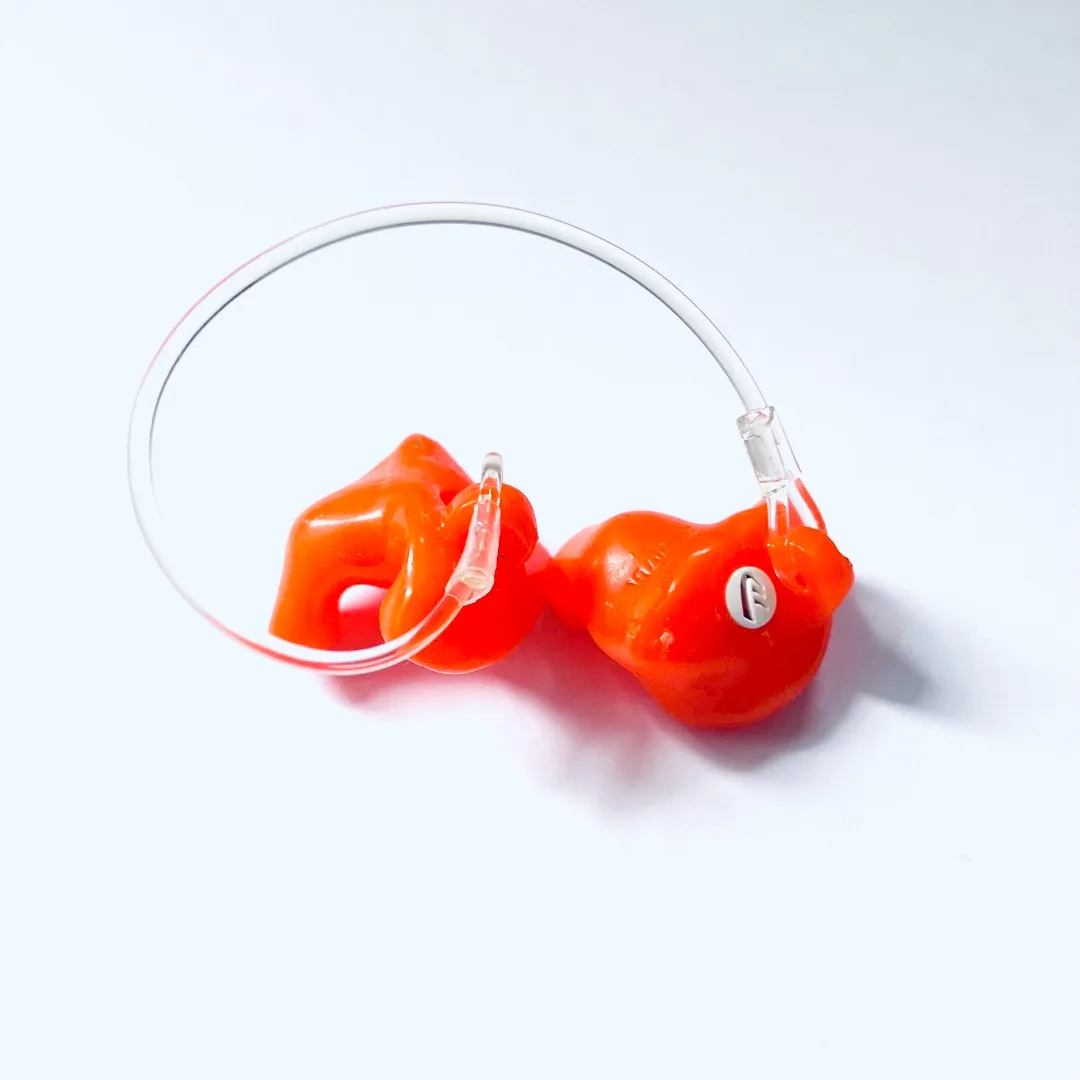
Made from an impression of the worker's own ear 12 |
Foam expands to the contour of the canal 12 |
Pre-shaped "to fit most ears" 12 |
Covers the canal entrance, held by a lightweight band 12 |
Surrounds the outer ear; headband or hardhat-mounted 12 |
| Comfort (field survey) |
Rated best overall and on all four comfort dimensions 13 |
Not significantly different from premolded on many characteristics 13 |
Generally preferred to foam 13 |
Not included in the survey 13 |
Not included in the survey 13; "may be uncomfortable in warm places" 12 |
| Dirty hands / insertion |
Pre-shaped; no roll-down step Q |
Must be rolled with fingers; poor choice for intermittent use at dirty sites 12 |
Easier to take off and put on for stop-start noise 12 |
Easier to take off and put on for stop-start noise 12 |
Easier to take off and put on; often easier to fit properly 12 |
| Durability |
More durable, lasts longer than formable or pre-formed 12; 3 to 5 years typical 27 |
Disposable; costed at 10 pairs per worker per week 20 |
Reusable; costed at 2 pairs per worker per month 20 |
No comparable data located |
Generally more durable than plugs; replaceable parts 11 |
| Weight / heat |
Lightweight 12Q; better for hot, humid areas 11 |
Lightweight 12 |
Lightweight 12 |
Lightweight band 12 |
Heavier; less comfortable in hot work areas 1112 |
| Other PPE / glasses |
Convenient with other PPE 11 |
Convenient with other PPE 11 |
Convenient with other PPE 11 |
Can interfere with hardhats, respirators, eyewear 12 |
Glasses can break the seal; may interfere with headgear 1112 |
| Supervisor visibility |
Safety orange on every mold Q |
Earplugs are "more difficult to see and monitor usage" 11; bright colours help compliance checks 28 |
"Easily seen at a distance" 11 |
| Fit consistency |
Attenuation depends on canal depth captured at impression 20; fit testing recommended 12 |
Depends on insertion skill; training improves results 18 |
More prone to loosening or falling out over a shift 18 |
No comparable data located |
Less attenuation variability between users 11 |
| Annual cost per worker (US model, 2018) |
US$50 (US$150 pair, 3-year life) 20 |
US$48 to $72 20 |
US$14.30 to $19.80 20 |
Not modelled in source |
Not modelled in source |